

ChatGPT vs Claude for Finance: What Mid-Sized Indian CFOs Should Actually Use in 2026
By BiPivot Team · 4 September 2026
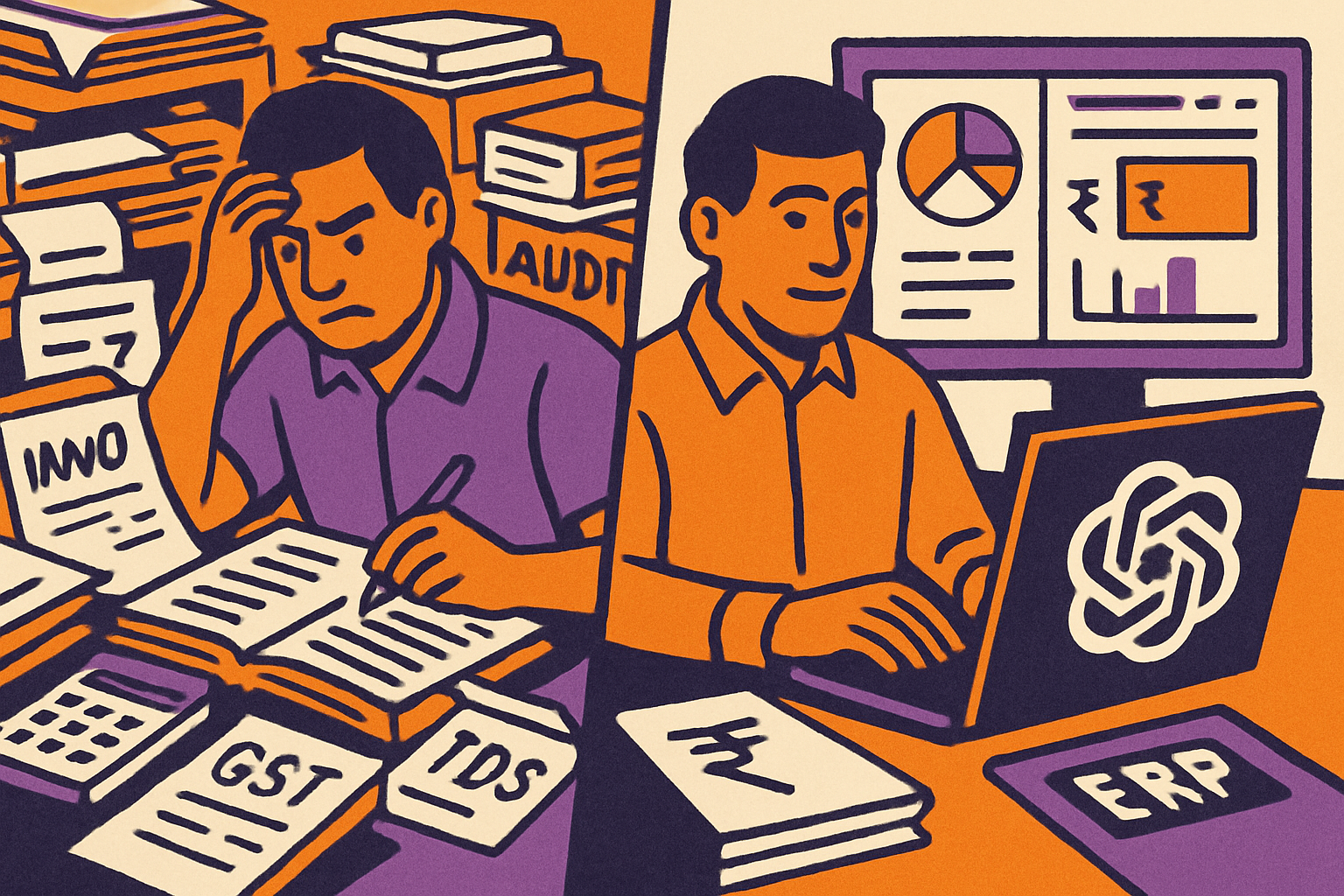
CFOs and finance heads of mid-sized Indian companies are increasingly exploring Large Language Models (LLMs) like ChatGPT and Claude. While both tools offer significant capabilities, navigating their optimal application is nuanced, often leading to challenges like 'tool sprawl.' Indian mid-market organizations already run an average of 4.6 AI tools, with 16% using seven or more, and this contributes to 'complexity overhead' and significant pressure on CFOs to demonstrate measurable ROI (source).
This article isn't a feature comparison. It's a decision framework built specifically for how Indian finance teams actually work — GST filings, TDS reconciliations, MCA filings, board decks, and audit trails — with the compliance overlay that most global AI comparisons simply ignore.
Which tool should draft your board report — and which one should build your model?
Start with the honest answer: they're built for different cognitive tasks, and pretending otherwise wastes hours.
Claude is the stronger choice when the job is reasoning across long, dense documents and producing careful, qualified prose. It has a larger context window and a more formal default writing style, which makes it noticeably better at synthesizing a 40-page loan agreement, a stack of audit working papers, or three years of board minutes into a coherent summary without losing nuance (source). If you've ever had a junior analyst summarize a related-party transaction note and miss a qualifying clause that changes the whole disclosure, you know why "careful and qualified" beats "fast and confident" in this context.
ChatGPT's edge shows up the moment the task becomes quantitative. Its Advanced Data Analysis feature lets it actually execute Python code against your data — recalculate a working capital ladder, pivot a three-lakh-row GST sales register, or build a custom GPT that repeats a specific reconciliation logic every month without you re-explaining it (source). If your team spends every 20th of the month wrestling with GSTR-2B matching in Excel, ChatGPT is the one you hand that pain to.
Here's a worked example. Say your FMCG distribution business needs two things done for the same closing cycle:
-
A board-ready commentary on why gross margin dropped 180 bps this quarter, referencing scheme spends, freight cost inflation, and a one-time GST demand of ₹42 lakh under dispute. This is a Claude task — long context (last four quarters of MIS, the GST order copy, distributor scheme notes), careful language ("under dispute, no provision created pending CIT(A) hearing" — not "we don't owe this"), and a tone that won't spook a lender covenant review.
-
A Python script that flags every vendor invoice where GSTR-2B credit doesn't match the purchase register, across 1,200 vendors and 14,000 line items for the month. This is a ChatGPT task — it can write, run, and iterate on the matching logic in the same session, output a clean exception list, and you can turn that script into a reusable custom GPT for next month.
Run the first prompt through ChatGPT and you'll often get punchier, more confident language that reads well in isolation but occasionally states things more definitively than your legal counsel would like. Run the second through Claude and it'll reason intelligently about the logic but won't execute code against your actual file the way ChatGPT's data analysis mode will. Match the tool to the cognitive demand, not to whichever one you have open.
Why does "careful and qualified" matter more in finance than in marketing?
Because overconfidence in an AI output isn't a stylistic quirk in finance — it's an audit finding waiting to happen. Claude's more conservative, hedged output style is a genuine risk-management feature, not a limitation (source). When an LLM tells your CFO with total confidence that a transaction qualifies for input tax credit, and it's wrong, nobody in your GST department is going to remember that "the AI said so" isn't a defense in front of a proper officer.
I've seen this play out with a mid-sized auto ancillary company in Pune. A finance executive asked ChatGPT to confirm whether ITC was available on a specific category of employee welfare expense under Section 17(5) of the CGST Act. It gave a clean, confident "yes, ITC is available" — technically wrong for that specific sub-category, and the company only caught it because their external CA cross-checked it before filing. Had they run the same query through Claude, the phrasing typically comes back closer to "ITC is generally blocked under 17(5) for this category, but there are specific exceptions — verify against the exact nature of the expense and current departmental circulars." That extra hedge is the difference between a five-minute double-check and a demand notice eighteen months later.
This is precisely the kind of error our piece on common GST errors AI can detect before they cost you ITC goes into in more depth — the point there is about systematic detection tools, whereas here the point is narrower: general-purpose chat tools are not GST compliance engines, and treating either ChatGPT or Claude as a substitute for a proper reconciliation workflow is where mid-sized companies get burned.
What does a realistic monthly workflow actually look like?
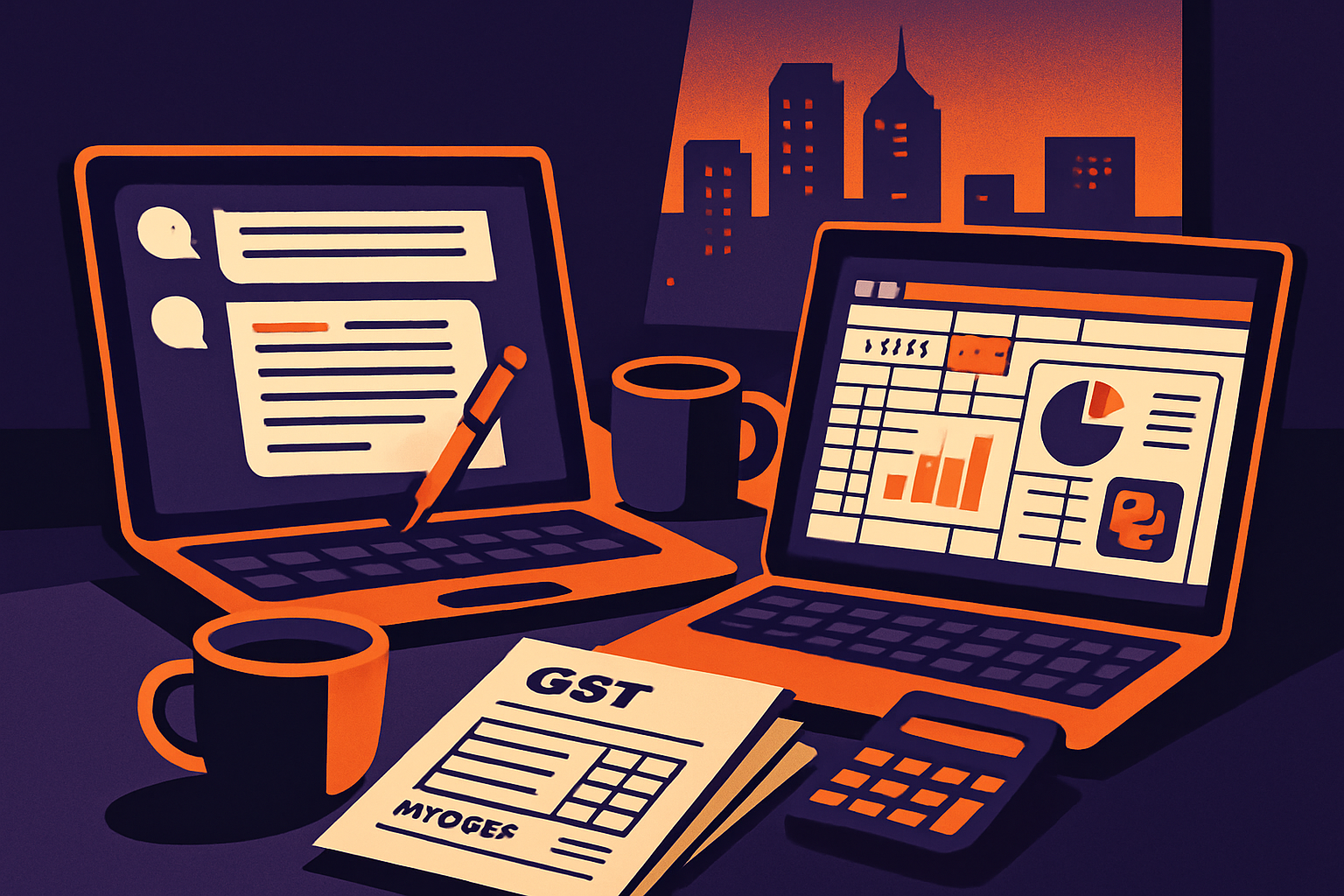
Here's what a pragmatic month-end cycle looks like for a ₹250-crore revenue manufacturing company using both tools deliberately.
Day 1–3 (data collation): ERP exports, bank statements, and distributor claims get pulled together. Neither tool touches raw data yet — this is where data fragmentation bites hardest, and no LLM fixes messy source systems. We've covered the mechanics of getting ERP data reporting-ready in our ERP reporting playbook; that groundwork has to happen before either AI tool adds value.
Day 4–7 (reconciliation, ChatGPT-led): GSTR-2B vs purchase register matching, TDS 26AS vs books reconciliation, and bank reconciliation exceptions get run through ChatGPT's data analysis mode. A well-built custom GPT here, fed a consistent column structure, can cut a two-day manual reconciliation to under three hours. One packaging company we advised built a reusable prompt template that flags TDS section mismatches (194C vs 194J misclassification) across their vendor master — a genuinely repetitive task ChatGPT handles well because it's rule-based and quantitative.
Day 8–10 (commentary and reporting, Claude-led): Once numbers are locked, the CFO uses Claude to draft the first version of the MIS commentary, board note, and lender covenant compliance certificate. Feed it last quarter's board pack as context, the current numbers, and any unusual items (litigation, related party changes, one-off write-offs), and ask it to draft in the same tone and structure as prior reports. Claude's strength in maintaining consistent, formal tone across a long document shows up clearly here — it won't suddenly switch to casual language halfway through a 12-page pack the way general chat outputs sometimes do.
Day 11 (review): Every AI-drafted number and sentence gets reviewed by a human before it leaves the finance function. Non-negotiable. More on why below.
What do RBI and DPDP actually require before you plug AI into finance workflows?
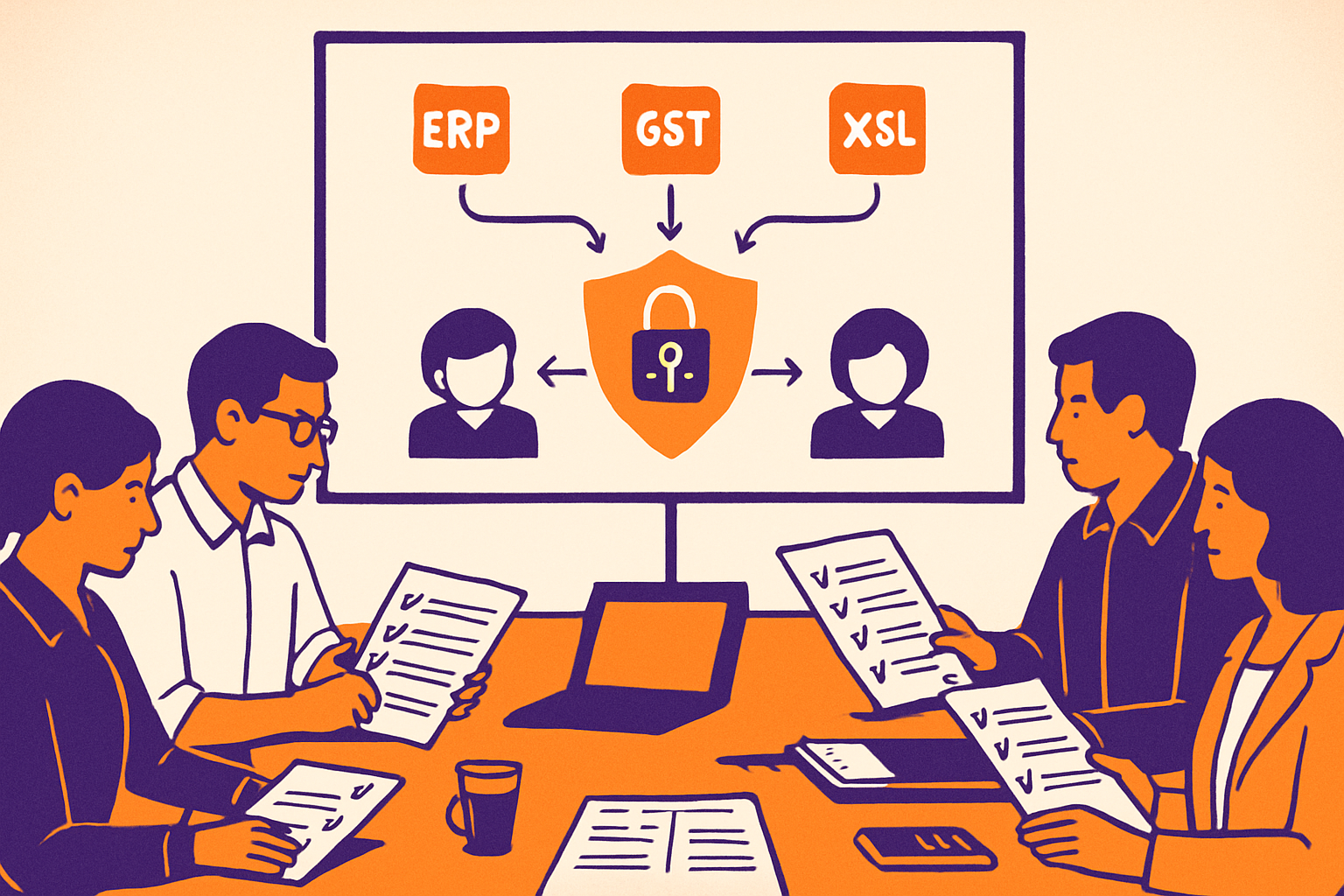
This is the section most AI comparison articles skip entirely, and it's the one that will actually get a CFO into trouble if ignored.
The RBI's draft "Guidance on Regulatory Principles for Model Risk Management," released in June 2024, and the subsequent FREE-AI committee report from August 2025, both push a clear message: board-level accountability, formal governance, and independent validation apply to AI/ML models used in financial decision-making — including tools sourced from third-party vendors like OpenAI or Anthropic (source). If your company sits under any RBI-regulated entity relationship — as an NBFC, a bank's corporate borrower with covenant reporting obligations, or a fintech partner — this isn't optional reading. Even outside directly regulated entities, this is the direction every audit committee conversation on AI is heading.
Separately, the DPDP Act 2023 requires that any AI system processing personal data — and payroll, vendor KYC, and customer billing data absolutely qualify — follow purpose limitation, data minimization, valid consent, transparency, and data quality principles (source). Practically, this means: don't paste an employee's full payroll sheet with PAN numbers into a public ChatGPT or Claude chat window to "just quickly check something." Both companies offer enterprise tiers with data-retention controls that materially reduce this exposure — and if your finance team is using consumer-tier accounts for anything involving PAN, Aadhaar, salary, or bank account data, that's a governance gap your board should know about, not a convenience worth keeping quiet.
A simple internal rule that's worked for clients: anything that would appear in a data breach disclosure if it leaked — PAN, Aadhaar, bank details, salary structures — never goes into either tool without enterprise-grade data controls in place. Aggregate numbers, ratios, and anonymized line items are fine. Named individual financial data is not.
For a broader view of how to structure AI governance across your finance function — not just for these two tools — see our governance playbook for mid-sized Indian companies, which covers the board oversight structure this RBI guidance is nudging everyone toward.
Is the ROI actually there, or is this another complexity trap?
Be skeptical of your own excitement here. The India AI in Finance market is projected to grow from USD 867 million in 2023 to USD 9,651 million by 2032, a 30.7% CAGR (source), and 36% of Indian organizations have already embedded AI across multiple core business functions, more than double the global average of 15% (source). Impressive numbers — but 85% of Indian CFOs report moderate to significant pressure to prove ROI on AI spend, and 71% prioritize deployment speed over governance (source). That combination — speed pressure plus weak governance — is exactly how a company ends up with an accountability gap when something goes wrong.
Mid-market companies specifically are losing an estimated 27% of their average AI budget to complexity overhead, roughly ₹33,000 crore in wasted AI spend annually across the segment (source). Translate that to a typical ₹150-crore revenue company spending, say, ₹18 lakh a year across five different AI subscriptions and pilots — roughly ₹4.9 lakh of that is being wasted on tools that overlap, don't integrate, or nobody fully adopted. Running both ChatGPT Plus/Team (roughly ₹1,700–2,000/user/month) and Claude Pro/Team (similar range) for a 6-person finance team costs about ₹2.4–2.9 lakh a year combined — cheap compared to one bad AI-generated GST filing error, but only if you're deliberate about who uses what for which task, not paying for both and using neither properly.
And the timeline expectations need resetting too: 74% of Indian executives expect ROI within eight months, but 51% of organizations report AI deployments take six to twelve months just to go live (source). For chat-based tools like ChatGPT and Claude, the good news is that go-live is nearly instant — the real lag is in building disciplined SOPs around them, not technical integration. Which brings us to the part most companies skip.
How do you actually roll this out without creating a governance mess?

A five-step rollout that's worked with clients, adapted for a typical 8–15 person finance team:
-
Assign tools to task types, not people. Write it down: "Board commentary, audit responses, lender communication → Claude. Reconciliations, Excel modeling, custom automation scripts → ChatGPT." One page, pinned in the team's shared drive.
-
Enterprise accounts only, from day one. Consumer-tier accounts with no data-retention guarantees are not acceptable for anything touching vendor, employee, or customer financial data under DPDP Act obligations. Budget roughly ₹2,000–2,500 per user per month for either tool's business tier.
-
Build 3–5 reusable prompt templates before letting the team freelance. A GSTR-2B mismatch template, a TDS section classification checker, a board commentary template with your company's standard structure and disclaimers baked in. This is where the actual time savings come from — not ad hoc prompting.
-
Every AI output gets a named human reviewer before it leaves finance. Put this in your SOP document formally — not as a verbal understanding. If you haven't formalized SOPs that people follow rather than ignore, this is worth fixing first; AI tools amplify whatever discipline (or lack of it) already exists in your process.
-
Log where AI touched a number. A simple tag in your working papers — "GST exception list generated via ChatGPT, reviewed by [name], [date]" — creates the audit trail that RBI's model risk principles and any decent statutory auditor will eventually ask for.
None of this is exotic. It's the same discipline mid-sized companies already apply to Tally access controls or approval matrices — just extended to two new tools that happen to write and calculate faster than any analyst on your team.
So which one should you actually subscribe to first?
If your team's biggest monthly pain is drowning in reconciliation spreadsheets and repetitive Excel work, start with ChatGPT's paid tier and its Advanced Data Analysis feature — you'll see time savings within the first billing cycle. If your biggest pain is that board decks and audit responses take too many drafts and too many late nights to get the tone right, start with Claude. Most mid-sized finance teams we've worked with end up on both within two quarters, precisely because the tasks genuinely split this way, but you don't need to buy both on day one to start seeing value — pick based on your current bottleneck, not on which tool is trending.
How can BiPivot assist with AI in finance?
We work with Indian finance teams to turn AI tool sprawl into a disciplined workflow — mapping which tasks belong to which tool, building the reusable prompt templates and SOPs that make adoption stick, and setting up the governance trail your auditors and board will eventually ask for. If you're deciding how ChatGPT and Claude fit into your finance function without adding to the complexity overhead, talk to BiPivot.