

Automating Bank Reconciliation: Why Mid-Sized Indian Companies Can't Fix This With Excel Anymore
By BiPivot Team · 3 August 2026
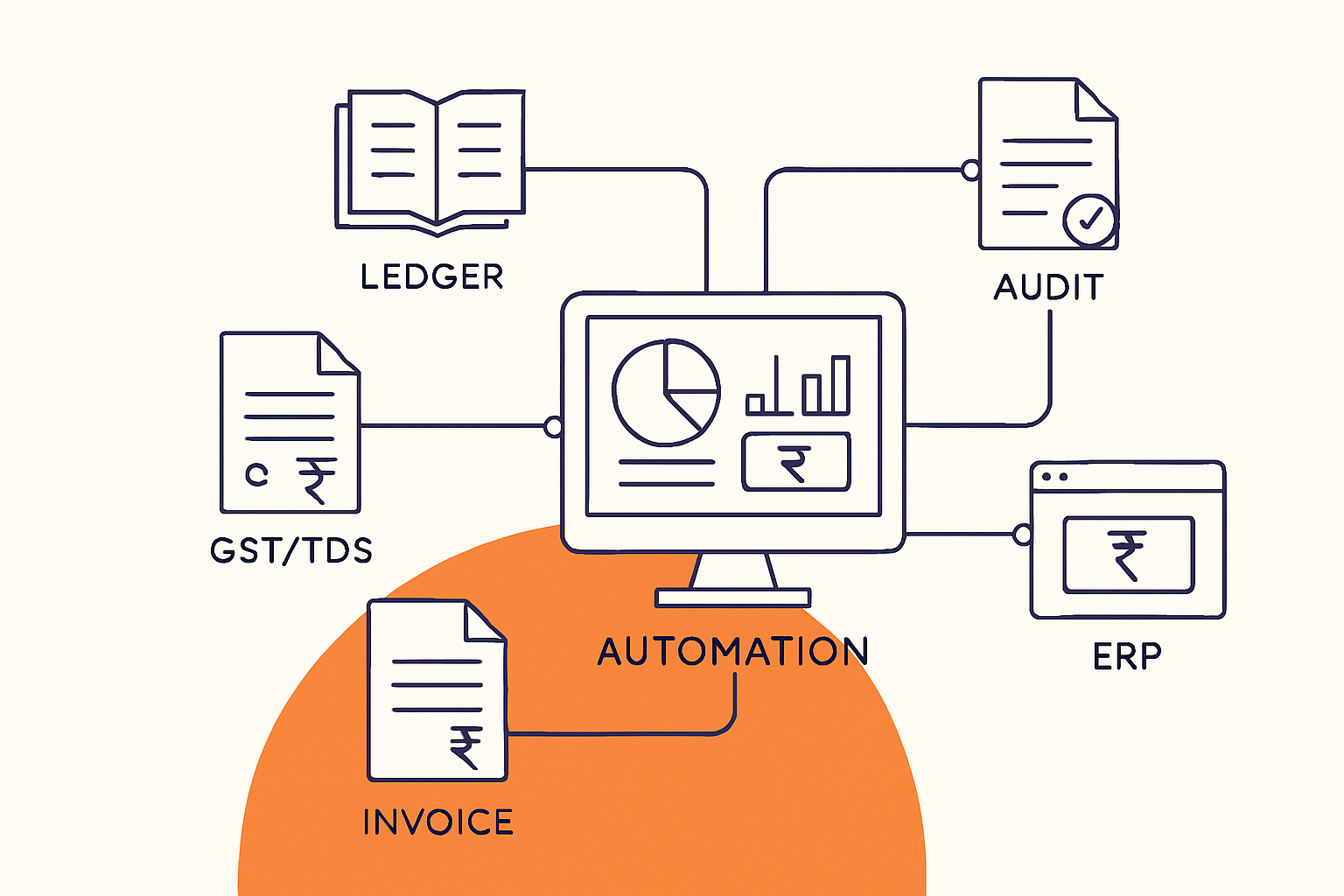
Every CFO at a mid-sized Indian company has lived this Monday morning: the bank statement shows a credit of ₹4,73,000 tagged "UPI-9876543210-NA", the sales ledger has three open invoices that could match, and nobody remembers which customer paid without the GST portion netted off. Multiply that by 40-50 such ambiguous lines a day, add TDS deducted at source, TCS on e-commerce sales, and payment gateway settlements that arrive net of fees three days late — and you understand why reconciliation, not the audit, is where most finance teams actually lose their weekends.
This isn't a process problem you can solve by hiring one more accounts executive. It's a structural mismatch between how India's payment and tax ecosystem generates data and how most finance teams still process it — in Excel, one bank statement at a time.
Why Does Bank Reconciliation Break Down Specifically in India?
Reconciliation software built for the US or Europe assumes clean transaction descriptions and a single tax layer. India has neither. Three things make Indian reconciliation structurally harder than almost anywhere else:
Digital payment noise. UPI, NEFT, RTGS and IMPS together generate transaction descriptions that are frequently unusable as-is — a vague UTR number, a truncated remitter name, or "NA" where the customer identifier should be. Indian businesses face distinct reconciliation challenges from this high volume of UPI transactions with vague descriptions, NEFT/RTGS credits lacking clear customer names, and payment gateway net settlements that bundle multiple invoices into one bank credit (Patron Accounting).
Three simultaneous tax-at-source layers. A single B2B invoice for ₹1,00,000 plus 18% GST rarely results in a bank credit of ₹1,18,000. The customer may deduct 2% TDS under Section 194Q (₹2,000), pay ₹1,16,000, and separately claim ITC through the GST portal. If it's an e-commerce receivable, TCS under Section 52 shaves off another slice. Reconciliation in India is uniquely complicated by these three simultaneous layers — TDS, TCS, and GST ITC — which create inherent, structural gaps between invoice amount and received amount (TerrainSight). A team reconciling by eye will mark this a "discrepancy" every single time, when it's actually a predictable, rules-based variance.
Tightening regulatory windows. From August 2025, CBIC's lowered e-invoicing threshold pulled a much larger pool of mid-sized businesses into mandatory e-invoicing, meaning more line items and a tighter window to reconcile against GSTR-2B before filing (AI Accountant). At the same time, RBI's expanded digital payment reporting guidelines require more granular tagging on every UPI and IMPS settlement, adding data fields finance teams must verify on entries that used to need none (AI Accountant).
How Much Time Is Manual Reconciliation Actually Costing You?
Put a number on it before you decide whether automation is worth the budget line.
A CA firm managing 20 SMB clients typically burns 50 to 60 hours a week just on bank reconciliation across those accounts — nearly two full-time employees doing nothing else (AI Accountant). At the level of a single mid-sized company, manual reconciliation consumes 15 to 25 hours a month for businesses running 800-1,000 transactions across bank accounts, UPI collections, and payment gateways (Flick.ai).
Run the arithmetic on a manufacturing company with ₹80 crore turnover, six bank accounts, and a mix of NEFT, UPI, and two payment gateways. At 20 hours a month and a loaded cost of ₹700/hour for a senior accounts executive, that's ₹1,68,000 a year spent purely on matching — before counting the cost of the month-end close being delayed by three to five days while unmatched items get chased.
And 95% of businesses still run this process on spreadsheets, despite spreadsheets' well-documented weaknesses around version control, error propagation, and inability to scale past a few hundred rows without breaking (Paystand). We've written before about why Excel alone is no longer enough for mid-sized Indian companies — reconciliation is one of the sharpest examples, because the failure mode isn't a slow report, it's a missed ITC claim or a wrongly booked TDS credit that surfaces months later as a notice.
What Does an Automated Reconciliation Engine Actually Match?
Automation isn't "auto-fetch the bank statement." A properly built engine runs matching logic across four layers simultaneously:
- Exact match — amount, date, and reference number align perfectly. This typically clears 40-50% of transactions with zero human input.
- Fuzzy match — amount is close (within TDS/TCS tolerance bands you define), date is within a configured window, and a partial reference (last 4 digits of invoice number, GSTIN fragment, or UTR pattern) aligns. This is where UPI and NEFT ambiguity gets resolved algorithmically instead of manually.
- Rule-based variance match — the engine knows that a ₹1,18,000 invoice settling at ₹1,15,640 is fully explained by 2% TDS (₹2,360) plus a bank charge (₹0 to ₹100), and auto-tags it rather than flagging it as an exception.
- Aggregation/disaggregation match — one payment gateway settlement of ₹6,42,300 gets split back into the 47 individual customer invoices it actually represents, net of gateway fees and TCS.
Done well, this stack achieves an 85% to 95% auto-match rate for transactions without any human touch (Mynd Solutions), and Indian finance teams running it properly report up to 80% reduction in total reconciliation time (AI Accountant). The remaining 5-15% isn't noise to eliminate — it's the genuinely judgment-requiring exceptions (a customer short-paying by mistake, a duplicate UTR, a reversed transaction) that your team should actually be spending its 20 hours a month on, not the 85% that a machine can close in minutes.
How does an automated engine handle a complex invoice with TDS, TCS, and GST ITC?
Take a services company invoicing a large enterprise client ₹1,00,000 + 18% GST = ₹1,18,000.
- Client deducts TDS under Section 194J at 10%: ₹10,000
- Client remits: ₹1,08,000
- Bank statement shows: NEFT credit of ₹1,08,000, narration "NEFT-CLIENTCO-XXXX1234"
Manually, an accountant sees a ₹10,000 shortfall against the invoice and either books it as an unreconciled item or manually researches whether it's TDS, a rate dispute, or a partial payment — often taking 10-15 minutes per transaction when volumes are high.
An automated engine configured with your TDS rate table does this instead: matches the NEFT credit to the open invoice by amount-within-tolerance and partial narration match, auto-computes that ₹10,000 equals exactly 10% TDS, books the TDS receivable entry, and closes the invoice — all in under two seconds, with an audit trail showing which rule fired.
Now layer in the GST side. That same invoice's ₹18,000 GST component needs to show up in the client's GSTR-2B for you (as the recipient of TDS, if applicable) or for them (as the buyer claiming ITC on your outward supply). If your outward invoice doesn't reflect correctly in their GSTR-2B by the return filing deadline, their ITC claim breaks — and you'll get a call asking why. Automated GST reconciliation cross-checks your sales register against GSTR-2B/GSTR-1 filing data so this gap surfaces on day 3 of the month, not day 19 when the return is due.
Why Is TDS Reconciliation a Bigger Risk Than Most CFOs Realise?
TDS mismatches don't just cost accountant hours — they generate Section 200A demand notices, interest, and, from FY 2026-27, scrutiny against the new Form 168 in addition to Form 26AS. Research into this specific failure surface has identified fourteen distinct TDS reconciliation failure modes that turn into demand notices — mismatched PAN, wrong section codes, timing differences between deduction and deposit, short deduction not flagged before filing, and more (TerrainSight).
Here's the practical implication for a CFO: if your reconciliation process only checks bank credits against sales invoices, you're covering maybe 60% of the actual reconciliation surface. The other 40% — TDS deducted by customers reconciling against your 26AS, TDS you deduct on vendor payments reconciling against your TRACES filings, GST ITC reconciling against GSTR-2B — needs the same rigour, and ideally the same engine, not three separate spreadsheets maintained by three different people who don't talk to each other in the third week of every month.
What Does "Reconciliation Infrastructure" Mean, Beyond a Reconciliation Tool?
Most companies buy a point solution: software that matches bank statements to the ledger, full stop. That solves maybe a third of the actual problem. The more durable approach — and the one we advise CFOs to build toward — is a shared reconciliation engine that unifies three matching processes that are currently run separately:
- Bank-to-ledger (the classic reconciliation)
- Invoice-to-GST portal (sales register vs GSTR-2B/2A, purchase register vs GSTR-2B for ITC)
- TDS-to-TRACES (books vs Form 26AS and Form 168)
When these three run on one rules engine with a shared vendor/customer master and a common exception-tagging taxonomy, a discrepancy in one area automatically informs the others. A customer who's chronically late depositing TDS shows up as both a bank reconciliation delay and a 26AS mismatch — visible in one place instead of requiring three people to separately notice the same pattern.
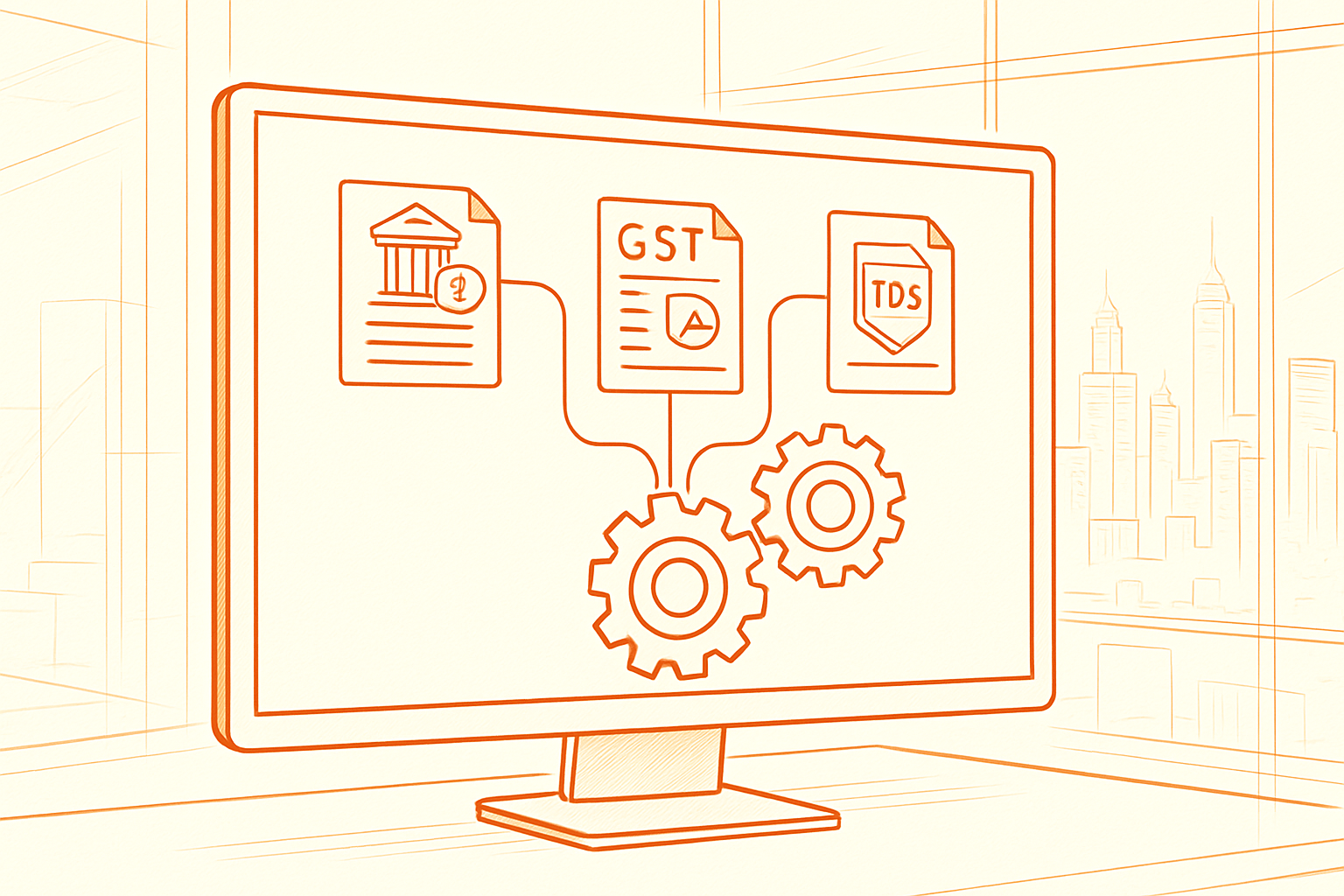
This is also where automated systems earn their keep on fraud and audit readiness. Automated reconciliation bolsters fraud detection by flagging discrepancies immediately rather than at month-end, and generates an immutable digital audit trail auditors can walk through line by line (CashOS). Given that organisations lose an average of 5% of revenue to fraud annually, much of it enabled by delayed or inaccurate reconciliation (FSS), same-day exception flagging isn't a nice-to-have — for a ₹100 crore revenue company, 5% is ₹5 crore of exposure sitting in the gap between "transaction happened" and "someone noticed it looked wrong."
How Does Real-Time Bank Data Actually Reach the Reconciliation Engine?
The infrastructure question that used to stump every Indian CFO — "how do I even get clean, structured bank data without a person downloading statements from six bank portals every morning?" — is being solved at the regulatory level. RBI's Account Aggregator framework is standardising real-time, consent-based bank feeds across Indian banks, which shifts the finance team's job from manual data collection to exception resolution and analysis (AI Accountant).
Practically, this means a mid-sized company with accounts across HDFC, ICICI, and a regional cooperative bank no longer needs someone logging into three net-banking portals every morning to export CSVs. The data arrives standardised, and the reconciliation engine's job starts immediately rather than after a two-hour data-wrangling exercise.
This real-time visibility compounds with what we've covered in our cash flow dashboard design guide for mid-sized Indian companies — a dashboard is only as trustworthy as the reconciliation feeding it. Real-time cash flow visibility from automated reconciliation is what makes liquidity management and same-day operational decisions possible, rather than working off a cash position that's three days stale (Mynd Solutions).

What Should a CFO Actually Do in the Next 90 Days?
Don't start with a software evaluation. Start with a diagnostic.
Days 1-15: Map your reconciliation surface. List every bank account, every payment mode (UPI, NEFT, RTGS, gateway), and every tax layer (TDS deducted by you, TDS deducted on you, TCS, GST) touching your reconciliation. Most CFOs are surprised to find 6-8 distinct reconciliation streams running as separate, undocumented spreadsheet processes.
Days 16-45: Quantify the exception rate. Pull three months of data and tag every unmatched or manually-adjusted transaction by root cause — vague narration, TDS variance, gateway netting, timing mismatch. This tells you exactly which matching rules an automated engine needs, rather than buying generic software and discovering it can't handle your actual exception patterns.
Days 46-90: Pilot on your highest-volume account first. Don't automate all six accounts on day one. Pick the account with the highest transaction count (usually your primary collections account), get auto-match rates above 80%, then expand. This mirrors the phased approach we recommend in building a data-driven finance function — sequence the wins, don't boil the ocean.
Throughout, resist the temptation to treat this purely as a software purchase. The India Applied AI in Finance market is projected to grow from USD 0.578 billion in 2025 to USD 3.59 billion by 2035, a 20.28% CAGR (Market Research Future) — plenty of vendors will be pitching you. The rules engine, exception taxonomy, and master data quality matter more than which vendor logo sits on top of it.
What Happens to Your Finance Team's Role After Automation?
The honest answer: their job gets more interesting, not smaller. AI-led automation in accounting and finance operations can cut time spent on financial reporting by up to 50% (e42.ai), and PwC research puts routine task time savings from finance automation at up to 40% (Alaan). That reclaimed time needs a destination, or it just evaporates into other low-value work.
The destination should be: exception investigation (the genuinely hard 5-15%), TDS and GST rate planning ahead of transactions rather than clean-up after, and feeding accurate, timely reconciled numbers into the MIS and P&L reporting your leadership actually reads — something we cover in depth in our guide to building Power BI dashboards CFOs actually trust. Reconciliation automation done right is the plumbing; the dashboards and decisions are the point.
Upskilling your team to manage rules engines, interpret exception patterns, and own the reconciliation infrastructure — rather than manually keying entries — is the real transformation. It's a shift finance leaders should plan deliberately rather than let happen by accident once the software is switched on.
How BiPivot Helps
BiPivot works with CFOs of mid-sized Indian companies to design reconciliation infrastructure that actually matches how Indian payments and tax layers behave — not a generic bank-feed tool bolted onto an ERP. If you're mapping your reconciliation surface or evaluating where automation should sit first, explore our approach at bipivot.com or see how we structure a 90-day diagnostic through our consulting practice.