

Invoice Matching Automation: A CFO's Guide to Protecting ITC and Cash Flow in India
By BiPivot Team · 30 August 2026
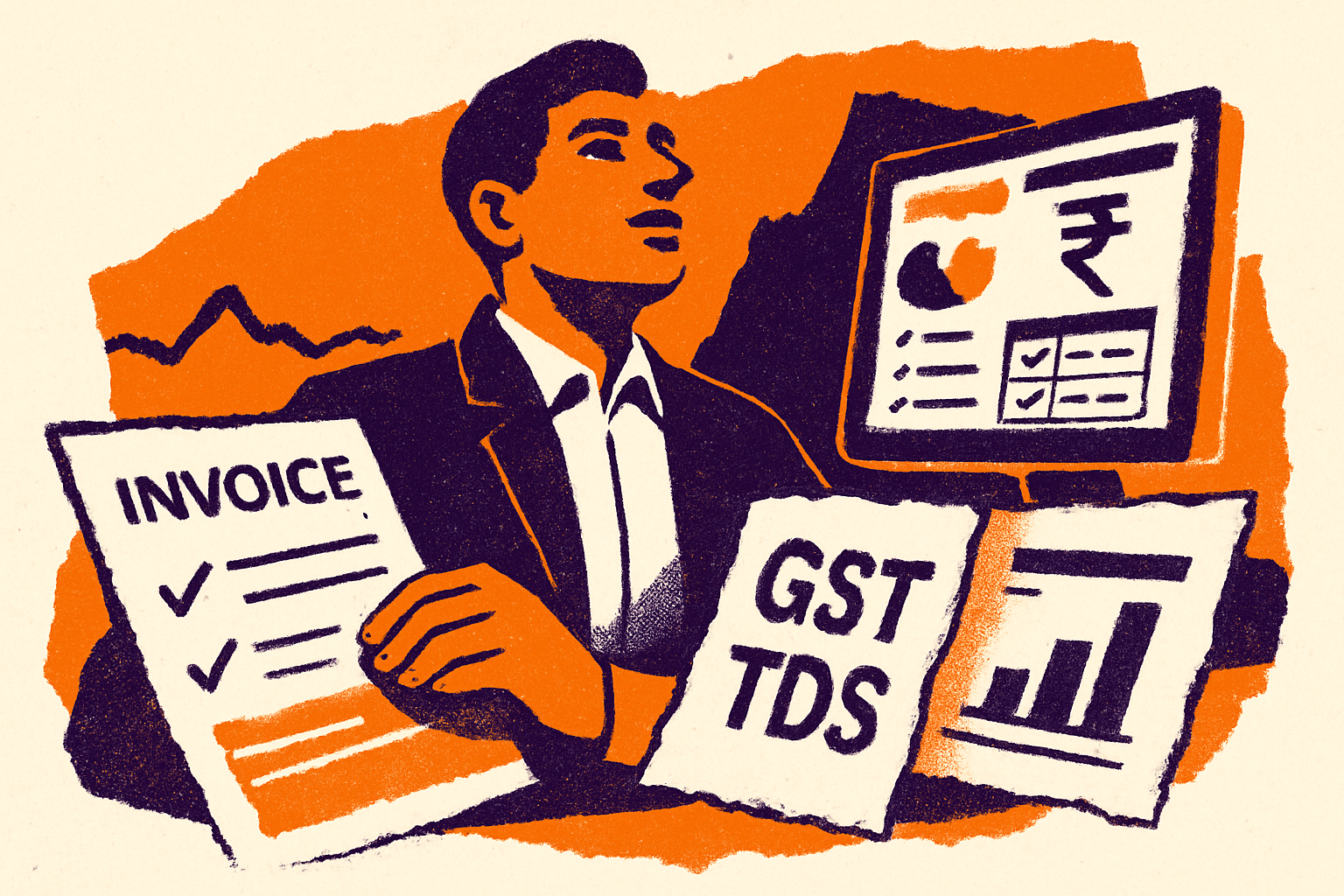
Every month, your AP team spends more time chasing missing GRNs and arguing with vendors over ₹8,000 quantity mismatches than they spend actually paying anyone. Meanwhile, your GST filing deadline is bearing down, and nobody is quite sure how much ITC you are about to lose because three invoices from your top supplier never matched cleanly against GSTR-2B. This is not a productivity problem. It is a working capital problem wearing a productivity costume.
Invoice matching automation is the single highest-leverage fix available to mid-sized Indian finance teams in 2026 — not because it makes AP "faster," but because it directly protects two things CFOs are personally accountable for: Input Tax Credit and MSME payment compliance. Get either wrong and the exposure is not theoretical.
What is invoice matching, and why is it complex in India?
Invoice matching is the process of validating that what a vendor billed you, what you ordered, and what you actually received are the same thing before you pay or claim tax credit on it. In a two-way match, you compare invoice to purchase order. In a three-way match, you add the goods receipt note (GRN). In India, there is effectively a fourth leg: the government's own record of the invoice.
Invoice matching is a legal requirement under India's GST regime — it exists to ensure consistency between supplier and buyer records so that tax reporting and ITC claims hold up under scrutiny (CompaniesInn). That fourth leg is what makes Indian invoice matching structurally different from a US or European AP process. You are not just reconciling internal documents; you are reconciling against a government portal.
Since August 2023, e-invoicing has been mandatory for B2B and B2G transactions for any business with annual turnover above ₹5 crore (ecosio). If your turnover crosses that threshold, every qualifying invoice must be cleared through the Invoice Registration Portal (IRP) before it is legally valid — a "clearance model" where the supplier submits the invoice to the IRP, receives back a unique Invoice Reference Number (IRN) and QR code, and only then can issue the final invoice (EDICOM). If your vendor's invoice doesn't carry a valid IRN, you have a compliance problem before you've even opened the PDF.
So a mid-sized Indian company running three-way matching today is really running a five-way check: invoice, PO, GRN, IRN validity, and GSTR-2A/2B presence. Most manual AP processes were never designed for that fifth leg, which is exactly where ITC leaks out.
How much does manual invoice matching truly cost Indian businesses?
Manual invoice processing costs Indian businesses an average of ₹350 to ₹800 per invoice once you account for error correction, late payment penalties, and missed early-payment discounts (OneFinOps). A mid-sized company processing 4,000 invoices a month at even the midpoint of that range — say ₹550 — is spending roughly ₹26.4 lakh a month, or over ₹3.1 crore a year, just to get invoices from inbox to payment. That's before you've paid a single vendor a rupee for actual goods or services.
Compare that to automated processing, which can bring per-invoice cost down to ₹20–₹50, a saving of ₹100–₹250 per invoice (Pazy.ai). On the same 4,000-invoice monthly volume, even a conservative ₹150 saving per invoice is ₹6 lakh a month — ₹72 lakh a year — recovered purely from processing efficiency, without touching the ITC or penalty side of the ledger.
Then there's time. Manual invoice processing in Indian companies typically takes 8–15 days from receipt to payment, once you factor in approval cycles and physical document routing (Pazy.ai). Automation delivers 60–80% time savings per invoice and pushes accuracy to 99.5% or higher through AI validation (AI Accountant). Cut a 12-day cycle to 3 days and you're not just saving labour hours — you're within striking distance of MSME payment deadlines that a 12-day approval cycle regularly blows past.
Why is invoice exception handling so challenging for Indian AP teams?
Ask any AP manager what actually consumes their day, and it's rarely the clean invoices. It's the messy ones — and in India, messy is the norm, not the exception.
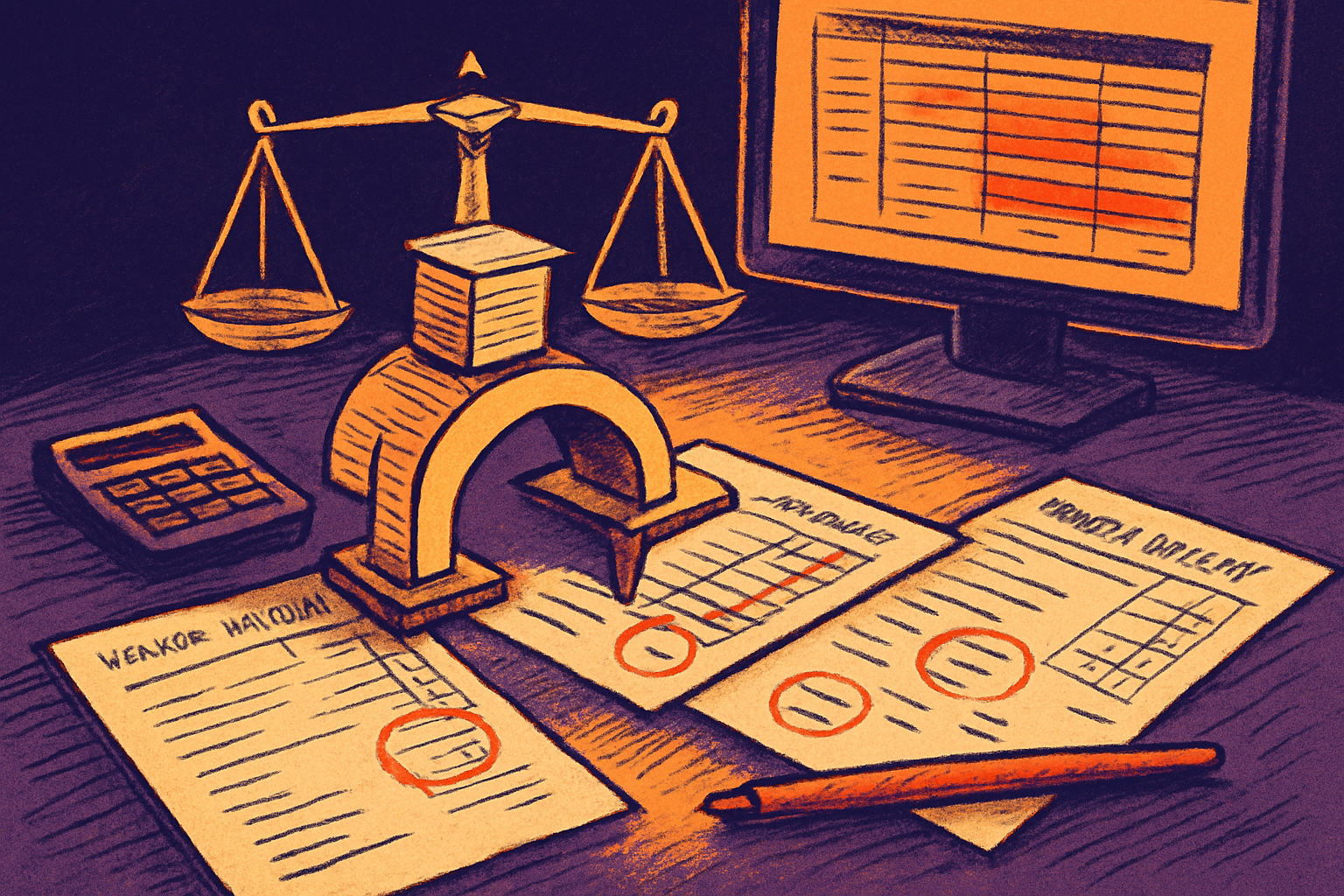
High invoice volumes combined with partial shipments, quality rejections, and price renegotiations push manual invoice matching exception rates to 60–75% in Indian companies, meaning most of the AP team's time goes into exception handling rather than actually processing payments (OneFinOps). Think about what that means structurally: if 7 out of every 10 invoices need manual intervention, you haven't built an AP process — you've built an an exception-handling department that occasionally pays vendors.
A typical break looks like this: a distributor supplies 500 units against a PO for 600, due to a partial shipment. The invoice arrives for the full 600 at ₹1,200 per unit — ₹7.2 lakh — but the GRN only confirms 500 units received, worth ₹6 lakh. Someone in AP now has to manually chase the warehouse team, confirm the shortfall, get the vendor to issue a credit note or a revised invoice, and only then release payment. Multiply that by hundreds of SKUs a month across multiple plants, and you understand why exception queues back up for weeks.
If this describes your environment, our guide on finance automation for manufacturing companies goes deeper into the plant-to-ledger workflow issues that compound invoice matching breaks — this article focuses specifically on the matching and reconciliation layer, not the broader manufacturing finance stack.
How do invoice mismatches lead to lost Input Tax Credit (ITC)?
This is the number that should be on every CFO's dashboard, and most CFOs have never seen it broken out separately: Indian companies annually lose an average of 3.5% of their revenue due to unclaimed Input Tax Credit resulting from GSTR-2B mismatches (Finifi).
Take a company with ₹150 crore in annual revenue. A 3.5% ITC leakage translates to ₹5.25 crore a year — money that was legally available to offset your GST liability but was never claimed because an invoice number, GSTIN, or tax amount didn't match between what your vendor filed and what your books recorded. That's not a rounding error. That's a number that shows up in your effective tax rate every year, silently, unless someone goes looking for it.
Here's a concrete worked example. Your company records a purchase invoice from a vendor for ₹11,80,000 (₹10,00,000 taxable value + ₹1,80,000 IGST at 18%). Your vendor, however, filed their GSTR-1 with the invoice value at ₹11,00,000 due to a data entry error on their end, or filed it a month late so it shows up in a different GSTR-2B period than your books recognized it. When your GSTR-2B reconciliation runs, this invoice fails to match. Under the current framework, ITC claims are directly tied to matching against GSTR-2A and GSTR-2B, and discrepancies like this can lead to ITC denial and penalties (CAclubindia). If this happens across even 40–50 vendor invoices a quarter — entirely plausible at mid-sized transaction volumes — the cumulative blocked ITC can run into tens of lakhs before anyone notices, because most finance teams reconcile GSTR-2B once a month in a rushed pre-filing scramble rather than continuously.
We've written in detail about the specific error patterns that AI can catch before they cost you ITC in Common GST Errors AI Can Detect Before They Cost ITC, and about the reconciliation workflow itself in GST Reconciliation Using AI. This article's angle is upstream of both: invoice matching automation is what prevents the mismatch from being created in the first place, rather than catching it after the fact during monthly reconciliation.
How do TDS and MSME payment compliance factor into invoice matching?
Yes, TDS compliance involves complex rate applications across sections, threshold monitoring per vendor per financial year, challan generation, and timely filing — with real penalty risk for errors or delays (AI Accountant). If your invoice matching workflow doesn't automatically flag the correct TDS section (194C for contractors, 194J for professional fees, 194Q for goods purchases above ₹50 lakh threshold with a vendor) at the point of matching, that determination gets made manually, inconsistently, and often incorrectly across different AP staff. We cover the mechanics of fixing this properly in TDS Compliance Automation: Why Mid-Sized Indian CFOs Can't Wait for the New Income Tax Act 2026 — worth reading alongside this piece since TDS determination and invoice matching should happen in the same pass, not as separate processes.
Then there's the MSME payment clock, which is a significant compliance risk in Indian AP today. Section 43B(h) of the Income Tax Act, read with Section 15 of the MSMED Act, mandates payment to registered micro and small enterprises within 15 to 45 days — and missing that window doesn't just damage the vendor relationship, it makes the unpaid amount non-deductible as a business expense until actually paid (OneFinOps).
Here's why this matters in the invoice matching context specifically: if your matching process takes 10–12 days because of manual exception handling, and your internal approval workflow adds another 5–7 days, you've already consumed most or all of your 15-day window for MSME vendors before the invoice is even queued for payment. A company with ₹40 crore in annual MSME vendor spend that routinely pays 20 days late instead of within 15 could see a meaningful chunk of that ₹40 crore disallowed as a deduction in a given year — a direct tax cost created entirely by AP process speed, not by any dispute over the underlying transaction.
What does a compliance-native automated invoice matching workflow entail?
The distinction that matters here is "compliance-native" versus "compliance-adapted." A generic AP automation tool built for a US or European market and retrofitted with GST fields will match invoice-to-PO-to-GRN and stop there. A compliance-native workflow for India treats GSTR-2B, IRN validation, and TDS section determination as first-class steps in the same matching pass — not a separate monthly reconciliation exercise bolted on afterward.
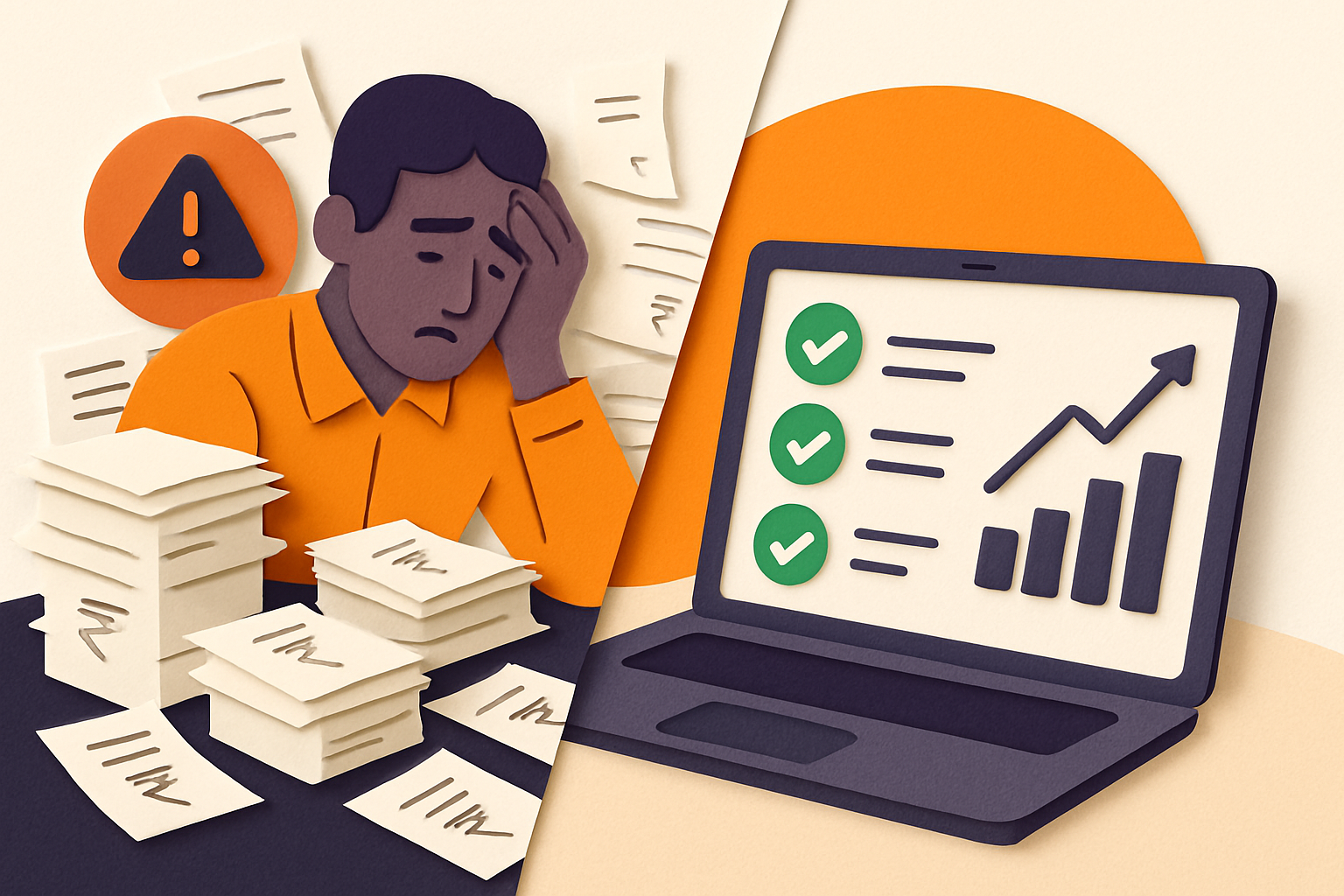
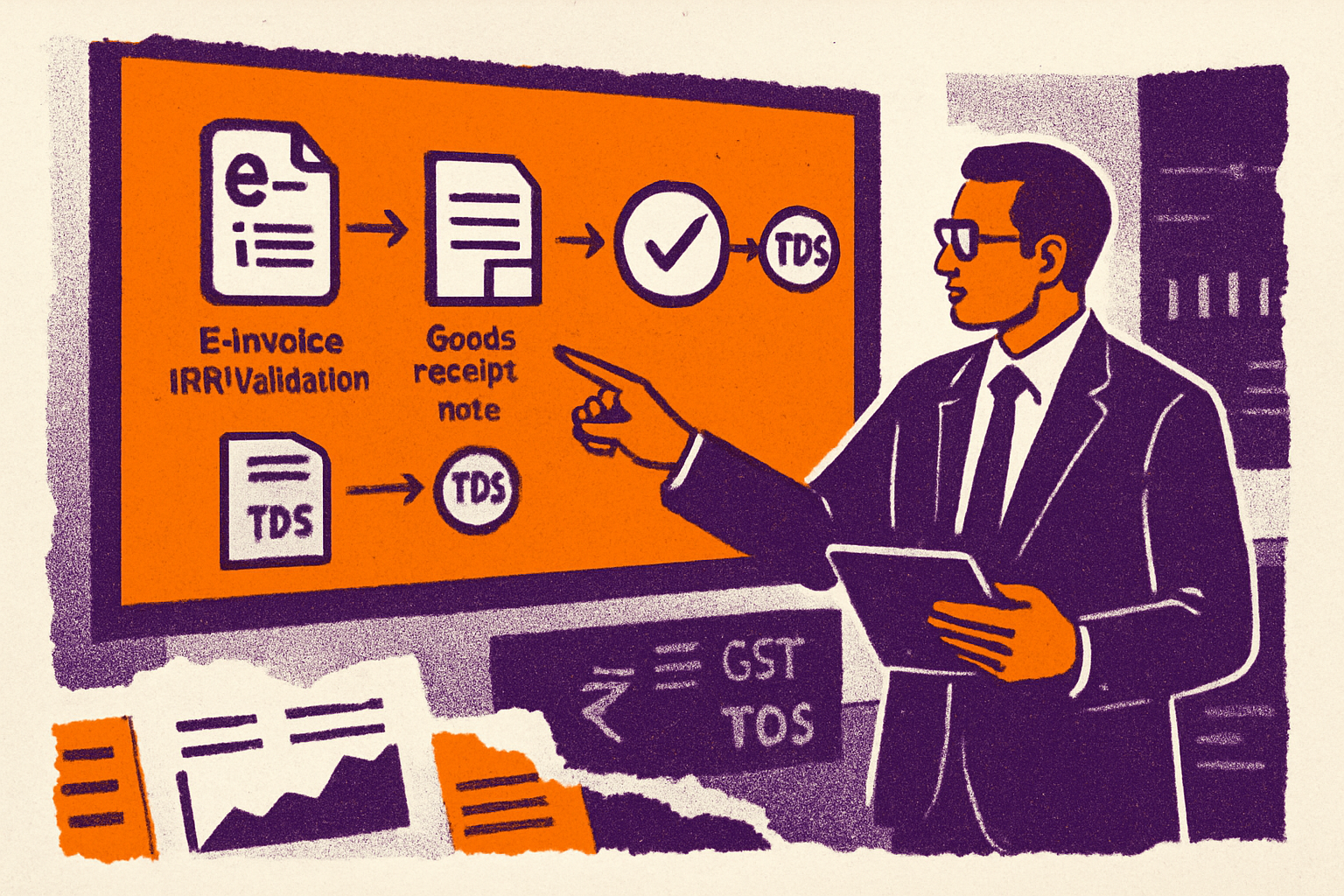
A practical five-step matching flow looks like this:
-
Ingestion and extraction — AI and ML-powered OCR pulls structured data from whatever format the invoice arrives in: a JSON e-invoice with an embedded IRN, a scanned PDF from a smaller vendor, or an email attachment, extracting line items, GSTIN, HSN codes, and tax breakup automatically rather than requiring manual keying (Zaggle). We've covered why OCR alone isn't enough for GST-grade extraction in OCR for GST Compliance — the extraction step needs GST-aware validation logic layered on top, not a generic OCR engine.
-
IRN and e-invoice validation — for any vendor above the ₹5 crore turnover threshold, the system checks that the IRN on the invoice is genuine and matches the IRP record before the invoice proceeds further.
-
Three-way match against PO and GRN — quantity, rate, and total value are checked against the purchase order and goods receipt note, with tolerance bands you configure (e.g., auto-approve variances under ₹500, route anything above to a named approver).
-
GSTR-2A/2B cross-check — rather than waiting for month-end reconciliation, the invoice is checked against the supplier's filed data as it becomes available, flagging mismatches on invoice number, GSTIN, or tax amount immediately so vendors can be chased for correction well before the filing deadline.
-
TDS section tagging and MSME clock start — the correct TDS section is applied based on vendor category and cumulative payment thresholds for the year, and the MSME payment countdown timer starts automatically the moment the invoice is matched and accepted.
Anomaly detection is the piece that makes this genuinely useful rather than just faster: ML models trained on your historical invoice data can flag a supplier suddenly billing 15% above their usual rate, or a duplicate invoice number reused across two different POs, patterns a human reviewer glancing at a spreadsheet is unlikely to catch (Zaggle).
How can automated invoice matching integrate with Tally or SAP?
The most common reason mid-sized companies stall on invoice matching automation is the assumption that it requires replacing their ERP. It doesn't, and treating it that way is the wrong project scope.
Seamless integration with existing systems — Tally, SAP, Oracle — is the crucial design requirement for any invoice matching automation solution in the Indian context (IQ Invoices). The matching engine should sit as a layer that ingests invoices, PO, and GRN data, runs the validation and matching logic, and then pushes a clean, matched, tax-coded voucher into Tally or SAP — not a parallel system that requires your team to maintain two sources of truth.
For a Tally-based mid-sized manufacturer, this typically means: the matching engine reads open POs and GRNs directly from Tally via API or a scheduled sync, matches incoming invoices against them, and posts the final voucher back into Tally only once matching is complete and TDS is tagged — so your Tally ledger only ever contains invoices that have already passed GST and MSME checks. For an SAP shop, the same logic runs against MM and FI modules, typically via middleware that respects your existing approval hierarchy in SAP rather than replacing it.
An added benefit of running the matching layer this way: automated AP systems provide a complete audit trail for every transaction — who approved what, when, against which PO and GRN version — which strengthens your position materially during both internal and statutory audits (Finifi). If you're building or tightening internal financial controls more broadly, this audit trail slots directly into the control framework we describe in Internal Financial Controls Explained — invoice matching automation is one of the highest-value controls you can implement, because it's evidence-generating by default rather than requiring a separate documentation exercise.
Is now the right time to invest in invoice matching automation?
The market data suggests waiting has a real opportunity cost attached. The Indian e-invoicing market itself is projected to grow at a 24.6% CAGR between 2026 and 2032 (6Wresearch), which tells you two things: the regulatory infrastructure around e-invoicing is only going to get more granular and more strictly enforced, and the tooling ecosystem built to handle it is maturing quickly, meaning today's implementation is cheaper and better supported than what existed even two years ago.
More tellingly, more than 40–50% of mid-to-large Indian companies are projected to migrate to cloud-based AP automation by 2026 (TechSci Research) — meaning by the time you read this, roughly half your competitive peer set will already be running matched, reconciled AP while you're still working from spreadsheets and physical routing. That gap shows up directly in DPO discipline, ITC recovery rates, and vendor negotiating leverage.
Data entry mistakes, calculation errors, and duplicate payments occur in 12–15% of manually processed invoices (Pazy.ai) — and duplicate payments in particular are cash that's genuinely gone, not just delayed, until you catch it and claw it back from the vendor. If you're building the SOPs and change management to make any of this stick with your AP team, our piece on SOPs employees actually follow covers the adoption side that technology alone won't solve.
What should a CFO do in the next 90 days?
Start with measurement, not procurement. Pull your last quarter's GSTR-2B mismatch report and quantify the actual rupee value of unclaimed ITC — most finance teams have never done this exercise in isolation. Separately, audit your MSME vendor payment timeline against the 15/45-day rule and flag how many invoices breached it. Those two numbers, not a vendor demo, will tell you whether invoice matching automation is a nice-to-have or an urgent working capital fix for your business.
How BiPivot helps
BiPivot works with mid-sized Indian finance teams to design invoice matching workflows that are built around GST and TDS rules from day one, not adapted after the fact, and that integrate directly with the Tally or SAP setup you already run. If you want a working view of what compliance-native invoice extraction looks like in practice, our invoice extractor tool is a useful starting point, and you can explore our broader approach at bipivot.com.