

Microsoft Fabric for Finance Teams: A CFO's Guide for Mid-Sized Indian Companies
By BiPivot Team · 15 August 2026
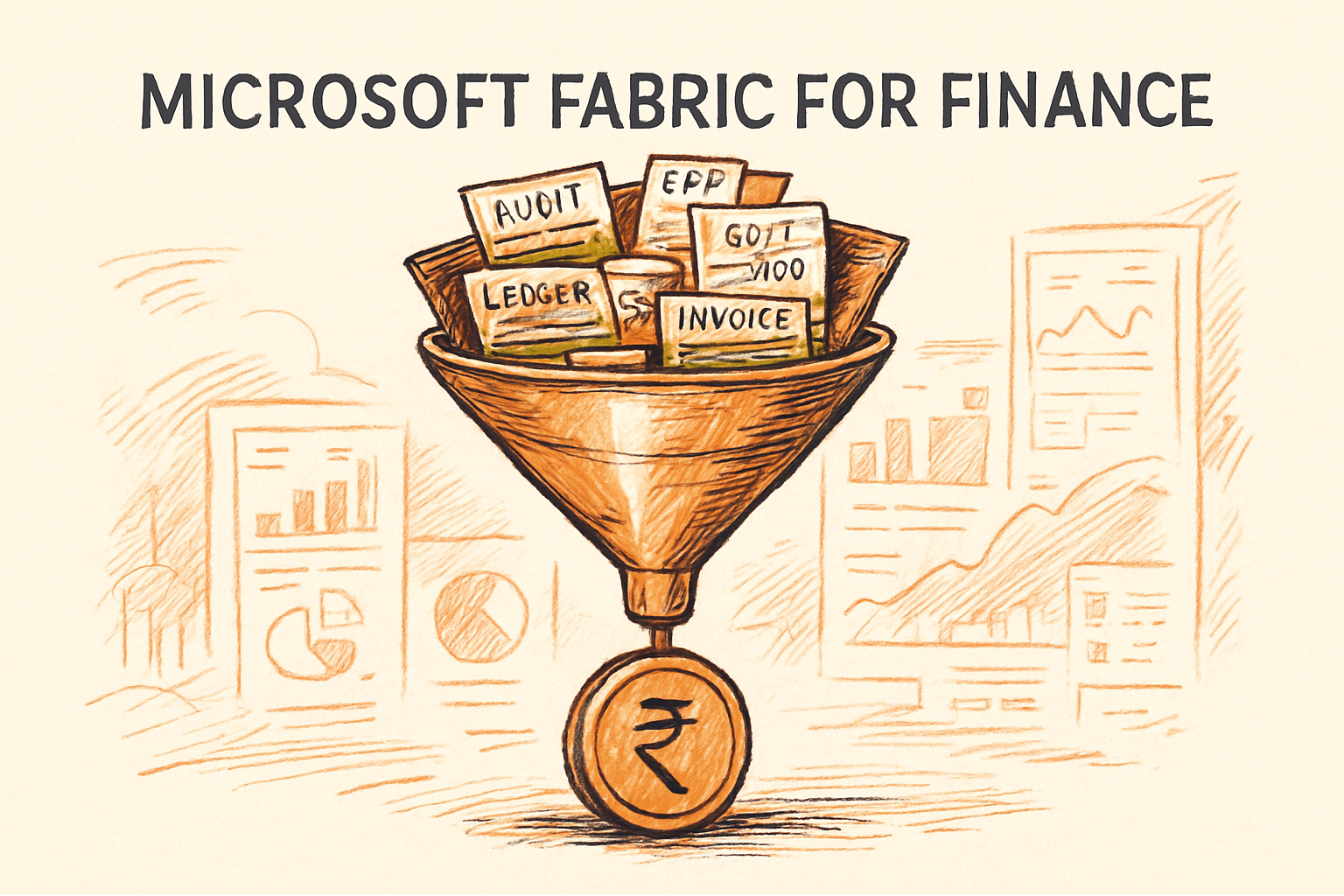
Every mid-sized Indian company reaches the same wall eventually. Sales runs on a CRM, manufacturing runs on SAP or an in-house ERP, twelve branch offices still close their books in Tally, and the CFO's team spends the third week of every month stitching it all together in Excel before the board pack goes out. Nothing is technically wrong — each system does its job — but nobody can answer "what's our real cash position today" without three days and two reconciliation calls.
This is precisely the problem Microsoft Fabric was built to solve, and it's why it has become the fastest-growing data platform in Microsoft's history, crossing over 31,000 paying customer organizations by March 2026 (Acterys). For Indian CFOs specifically — who are juggling GST filings, TDS reconciliations, DPDPA compliance, and board demands for faster forecasts — Fabric is less an "IT platform" and more a finance operating system.
What Problem Is Microsoft Fabric Actually Solving for Finance?
Strip away the marketing and Fabric does one thing well: it unifies data engineering, data science, real-time analytics, and business intelligence into a single SaaS solution (TSG). For a finance team, that means the pipeline that pulls data from your ERP, the model that forecasts working capital, and the Power BI dashboard the board sees on Friday morning are no longer three separate tools stitched together by an overworked analyst — they're one governed environment.
This matters because the pain point is universal and measurable. Globally, 36% of finance teams report that accessing data across multiple systems is their single biggest challenge in planning (Prolifics). In India, the same problem shows up differently: it's not just multiple systems, it's multiple generations of systems — a Tally instance for the trading arm, an SAP B1 rollout for manufacturing, a homegrown Access database for one acquired subsidiary, and a GST portal that refuses to talk to any of them.
We've written before about fixing this at the source — see our Tally to Power BI guide and our SAP-to-Power BI integration guide — but those articles solve the "last mile" reporting problem. Fabric solves the layer underneath: the data warehouse, the pipelines, and the governance that feed any BI tool, including Power BI.
How Does OneLake Actually Eliminate Data Silos?
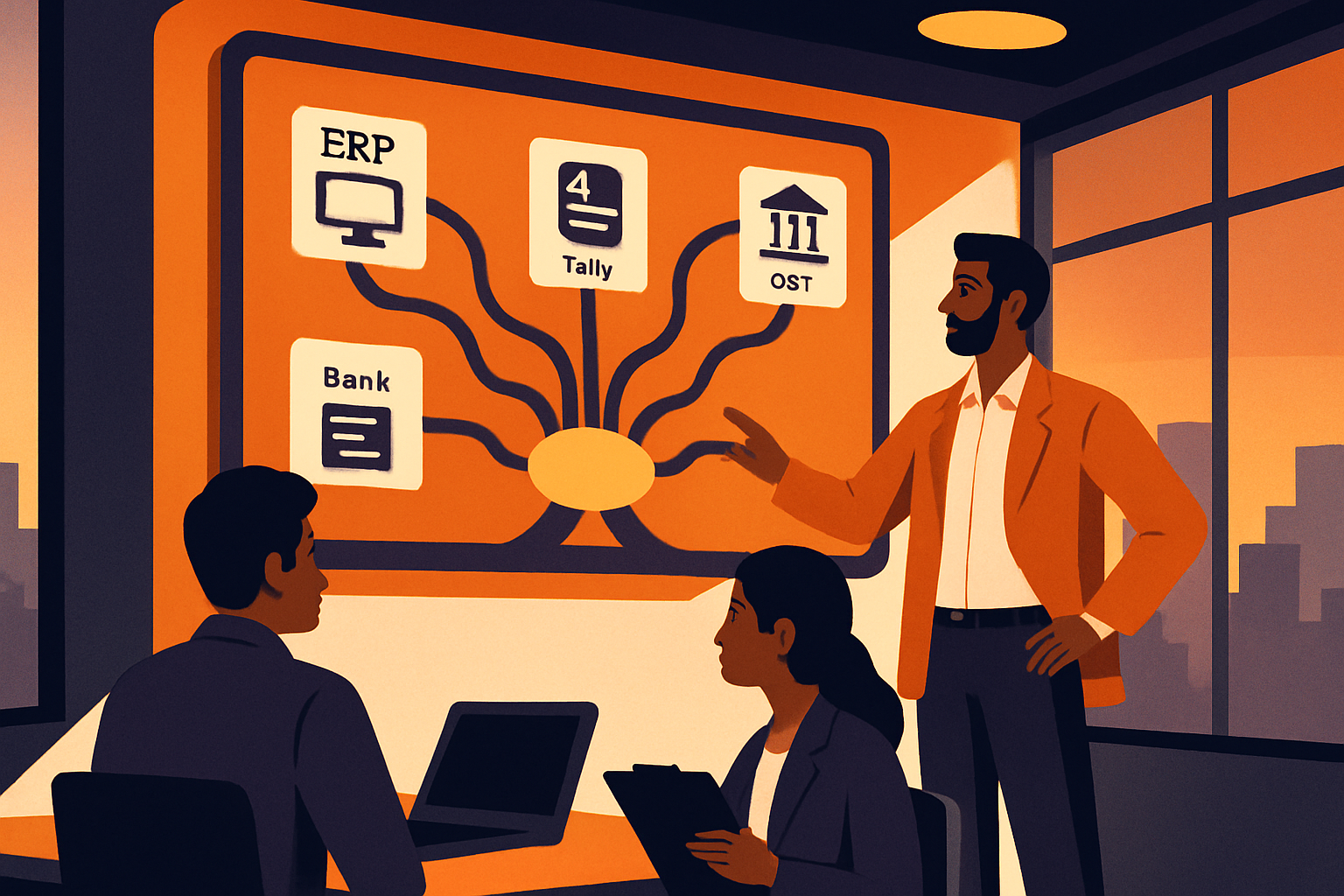
At the center of Fabric sits OneLake — a single, unified data lake that centralizes data from ERP, CRM, HR, and operational systems into one logical store, eliminating the silos that force finance teams into manual reconciliation (Vena). Think of it as one filing cabinet for the entire company, where every department's data lands in its native format but becomes queryable from a single place — no more exporting a CSV from SAP, another from Tally, and a third from the bank portal, then praying the vendor names match.
A worked example. Consider a Pune-based auto components manufacturer with ₹340 crore annual turnover, three plants on SAP, two trading subsidiaries on Tally, and a separate payroll system for 1,200 employees. Today, closing consolidated MIS takes 9 working days: exports from five systems, manual vendor-name mapping (SAP calls a vendor "Bharat Forge Ltd", Tally calls it "Bharat Forge"), GST reconciliation against GSTR-2B done separately in a spreadsheet, and a final PowerPoint built by hand.
With OneLake ingesting all five sources into a governed lakehouse, that same close compresses to 3 days — the mapping logic runs once as a pipeline rule rather than a manual VLOOKUP every month, and GST/TDS ledgers reconcile automatically against portal data pulled in via API. That's not a hypothetical multiplier; it mirrors what Microsoft's own internal finance team achieved when it adopted Fabric — a two-thirds reduction in report processing time and a 50% cut in data generation costs (TSG).
For CFOs who've already invested in cleaning up their sales register or vendor ledger — see our playbooks on sales register automation and vendor reconciliation automation — OneLake is where those clean feeds finally converge with everything else, instead of living as isolated point solutions.
Can Fabric Actually Move You From Reactive Reporting to Strategic Forecasting?
Most mid-sized Indian finance teams operate in permanently reactive mode: close the books, explain the variance, repeat. The promise of Fabric — and the reason 74% of Indian CFOs say digital transformation is a top priority, with 55% specifically targeting improved forecasting accuracy (Wolters Kluwer) — is that timely, trusted data changes what finance can do, not just what finance can report.
Because Fabric gives you a single trusted dataset rather than five conflicting exports, the finance team can finally build rolling 13-week cash flow forecasts, scenario models for a raw-material price shock, or a working-capital sensitivity table — all fed by the same numbers the auditors will later sign off on. This is the shift from reactive reporting to proactive strategic guidance that data platform vendors talk about (Kepion), and it's real when the underlying data is finally reliable.
Worked example: working capital forecasting. A Bengaluru IT services company with ₹180 crore revenue used to build its quarterly cash forecast by manually pulling receivables ageing from its ERP, payables from Tally (used by two subsidiaries), and bank balances from six accounts across three banks. The forecast was stale by the time it reached the CFO — often built on data 10-12 days old. With a Fabric lakehouse refreshing nightly and a semantic model feeding Power BI (we cover dashboard design principles in our cash flow dashboard blueprint), the same forecast now refreshes daily against near-real-time receivables, payables and bank data — turning a lagging snapshot into a living model the treasury team actually trusts for a ₹15 crore short-term borrowing decision.
Does It Actually Help With GST, TDS and DPDPA Compliance?
This is where the India-specific case for Fabric gets concrete, and where most global articles on this topic go silent.
GST and TDS. The CBDT's Project Insight and the GSTN's increasingly aggressive data-matching (GSTR-2A/2B auto-reconciliation, e-invoicing mandates) mean tax authorities now cross-reference your sales register, purchase register, e-way bills, and TDS returns automatically. A finance team running on five disconnected systems is structurally disadvantaged in this fight — mismatches surface only after a notice arrives. We've detailed the compliance-specific fix in our GST return automation playbook, but the underlying enabler is the same: your GST, TDS, and books-of-account data need to sit in one governed place so reconciliation happens continuously, not once a quarter under deadline pressure.
DPDPA 2023. As the Digital Personal Data Protection Act's enforcement machinery matures, finance teams handling vendor bank details, employee PAN/Aadhaar data, and customer payment information carry real exposure if that data is scattered across unsecured spreadsheets and shared drives. Fabric's integration with Microsoft Purview provides the governance and security layer — access controls, data classification, and audit trails — needed to demonstrate compliance rather than merely claim it (HSO). For a CFO signing off on data-handling controls in a board ESG or risk report, having Purview-backed lineage on where employee PAN data lives and who accessed it is a materially different conversation than "it's in a folder on the finance server."
What Does This Actually Cost the Business If You Don't Fix It?
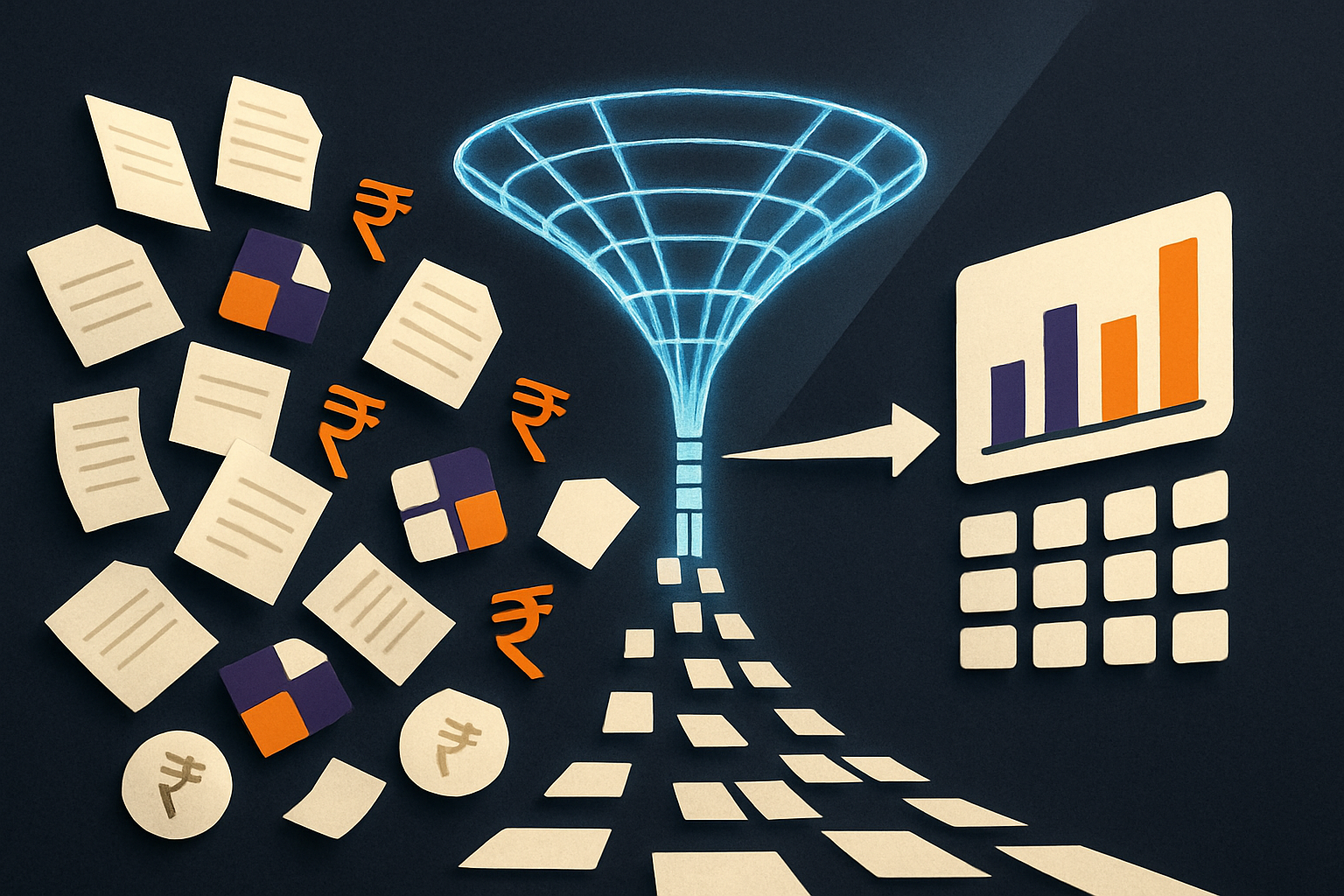
Poor data quality isn't a soft cost. The average annual cost of poor data quality for a mid-sized enterprise was estimated at $3.5 million (roughly ₹29 crore) in 2025 (Diacto) — a figure that captures rework, missed discounts from late vendor payments, duplicate payments, audit remediation, and the opportunity cost of decisions made on stale numbers.
Translate that to a mid-sized Indian company scale: a ₹250-500 crore turnover business with fragmented data typically bleeds ₹40-80 lakh a year just in finance team overtime during month-end close, duplicate or delayed vendor payments caught late (we've seen ₹12-18 lakh in a single quarter at one manufacturing client before reconciliation automation), and TDS/GST penalty exposure from mismatches that surface only after a notice. None of that shows up as a single P&L line item — it's distributed across departments, which is exactly why it survives budget scrutiny year after year.
Fabric's economics work in the opposite direction: because it consolidates fragmented infrastructure into one platform, it reduces the need for multiple disparate tools and minimizes costly data movement between systems (TSG). For a CFO evaluating tool sprawl — a separate ETL tool, a separate warehouse, a separate BI license, a separate governance tool — collapsing those into one Fabric capacity often nets a lower total cost even before counting the labor savings. Our modern finance tech stack guide walks through how to audit that sprawl before committing budget to any single platform, Fabric included.
Where Does AI (Copilot) Actually Fit for a Finance Team?
Copilot for Power BI and Copilot for Notebooks are embedded throughout the Fabric stack, and Microsoft positions them as productivity multipliers rather than novelties (Microsoft). In practice, for a finance team, this shows up in narrower, more useful ways than "chat with your data":
- Variance narration — Copilot drafts the first pass of a variance commentary ("Revenue in the Chennai region was ₹2.3 crore below budget, driven primarily by a 14-day slip in one client's PO release") that an FP&A analyst edits rather than writes from scratch.
- DAX and query generation — analysts who know finance but not DAX can describe a metric in plain English ("show me DSO by region excluding related-party receivables") and get a working measure to refine, cutting dashboard-build time significantly.
- Anomaly flagging in real time — Fabric's real-time processing capability, combined with Copilot, surfaces unusual transaction patterns as they occur rather than at month-end, which is directly relevant to risk management and fraud detection (Quadrant Technologies).
This lines up with where Indian CFOs say they're headed: over 70% plan to increase technology investment, and more than half intend to hire professionals with AI and automation expertise in the next 12 months (ThePrint). The practical implication for a mid-sized company: you don't need a data science team to get value from the AI layer — you need clean, unified data (which Fabric provides) and one analyst willing to learn Copilot's finance-specific prompts.
How Does Fabric Change the Way Finance Collaborates Day to Day?
A less-discussed but genuinely useful benefit is Fabric's tight integration with Microsoft 365 — the tools your finance team already lives in. Power BI reports surface directly inside Teams channels, and OneLake data can be analyzed directly in Excel without a separate export-import cycle (Microsoft). For a controller who still builds board decks in Excel because "that's what the CFO wants to review," this removes the friction that usually kills BI adoption — the data updates live in the same Excel workbook the finance team already trusts, rather than forcing everyone into a new tool overnight. Our MIS reporting best practices article covers how to design dashboards finance teams actually open — Fabric's M365 integration solves the adjacent problem of getting the underlying data trusted enough for that dashboard to matter.
Is Fabric Overkill for a Mid-Sized Indian Company, or the Right Size?
This is the honest question every CFO should ask before a single rupee is committed. Fabric is genuinely enterprise-grade — roughly 70% of Fortune 500 companies have adopted it or related capabilities (Vena) — which can make it look like a tool built for companies with ten times your data volume and a dedicated data engineering team.
The honest answer: Fabric scales down reasonably well because it's SaaS and consumption-priced, but it's the wrong first move for a company that hasn't yet fixed its source-system discipline. If your Tally entries are inconsistent, your vendor master has duplicate records, and your GST filings are still reconciled manually in Excel, adding a unified data platform on top just unifies the mess faster. The sequencing that works for most mid-sized Indian companies:
- Fix source-system hygiene first — clean vendor masters, consistent chart of accounts across entities, automated GST/vendor reconciliation (see our vendor reconciliation and purchase-to-payment playbooks).
- Automate the highest-pain manual process — usually bank reconciliation or sales register compilation (our bank reconciliation and sales register automation guides cover this in detail).
- Then evaluate a unifying platform like Fabric once you have two or three clean, automated data feeds worth centralizing — at that point OneLake and Purview earn their keep rather than becoming an expensive shelf-ware ambition.
A ₹150 crore company with one ERP and disciplined data hygiene may get more value from a well-designed Power BI layer directly on top of that ERP than from a full Fabric rollout. A ₹500 crore company with four ERPs, four state GST registrations, and a planned acquisition next year is exactly the profile where Fabric's consolidation pays for itself within 12-18 months.
What Should a CFO Do in the Next 90 Days?
Practical steps, in order:
- Audit your data sprawl — list every system finance currently pulls data from (ERP, Tally instances, GST portal, bank portals, payroll) and how many hours per month go into manual reconciliation across them. This number is your baseline business case.
- Pick one high-friction consolidation use case — GST/TDS reconciliation or multi-entity MIS consolidation are usually the highest-ROI starting points for Indian mid-sized companies.
- Run a scoped pilot — a single Fabric workspace connecting two or three source systems (say, SAP + Tally + GST data) into one lakehouse, measured against your current manual-close timeline.
- Involve IT security early on Purview governance — DPDPA exposure on employee and vendor PII should be mapped before, not after, data consolidation, since consolidation without governance concentrates risk rather than reducing it.
- Set a 90-day KPI — target close-time reduction, not "platform adoption." If consolidated MIS doesn't get faster and more accurate, the tool isn't earning its budget line.
How BiPivot Helps
BiPivot works with mid-sized Indian finance teams to sequence exactly this kind of data consolidation — from cleaning up Tally and ERP feeds to designing the governance layer that makes a platform like Microsoft Fabric worth the investment, rather than another tool sitting unused. If you're evaluating whether Fabric fits your data landscape or need a scoped pilot plan before committing budget, visit BiPivot to talk through your specific setup.